


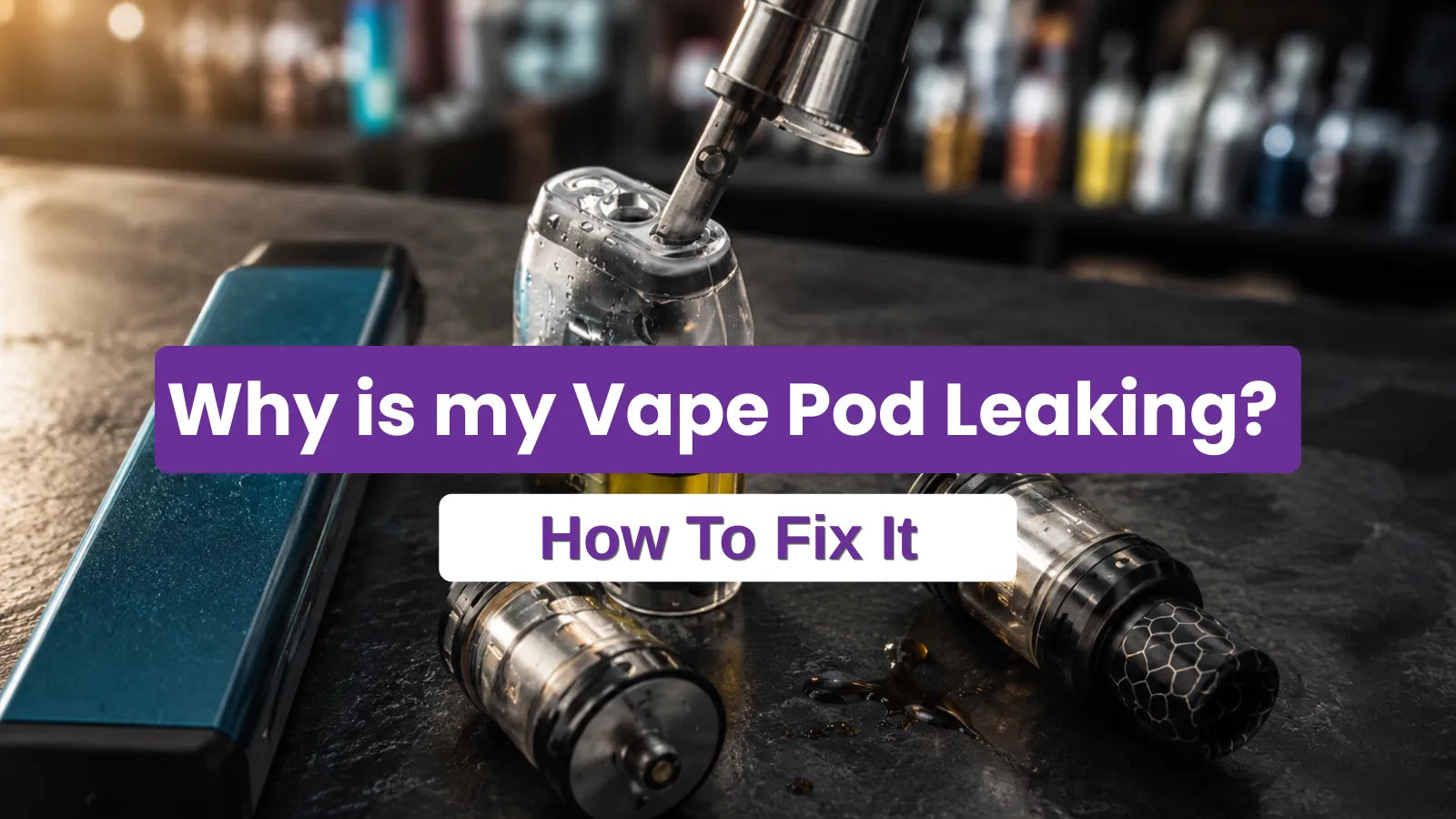
A leaking vape pod is the most common hardware issue UK vapers report, and the cause is almost always one of six fixable problems. The pod sits at the heart of every pod kit, it holds the e-liquid, houses the coil, and channels vapour through the mouthpiece, so a leak signals that one of those internal parts has slipped out of balance.
The 6 root causes are a worn coil, a damaged pod shell, an incompatible e-liquid, an overfilled chamber, a poorly seated coil, and an out-of-range wattage. Each cause has a clear fix.
Most leaks resolve in under 5 minutes once you identify the source. Royal Vapery stocks UK TPD-compliant vape pod kits and replacement parts, and the guidance below applies across every refillable and prefilled system sold in the UK.
What Is Causing Your Vape Pod to Leak?
A vape pod leaks when e-liquid escapes the wicking system inside the coil and seeps into the airflow channel, the base seal, or the pod housing.
Leaks fall into 3 mechanical categories, coil-level failure (the wick can no longer hold the liquid), structural failure (the pod shell or seal is compromised), and operational mismatch (the liquid, wattage, or fill level is wrong for the coil). Identifying which category your pod sits in is the first step to a permanent fix.
The 6 causes below cover roughly 95% of leaks reported across UK vape pods.
6 Common Causes of a Leaking Vape Pod
Diagnosing a leak is faster when you check causes in order of likelihood. The list below moves from the most frequent cause (a worn coil) to the most preventable (incorrect wattage). Work through each cause and stop at the one that matches your symptoms.
1. The Coil Has Reached the End of Its Life
A vape coil lasts 7 to 14 days under moderate UK MTL use, and a worn coil is the single most common cause of pod leaks. The wicking cotton inside the coil swells, darkens, and loses its ability to absorb e-liquid evenly, so unburned liquid pools at the base of the pod and escapes through the airflow ports.
Early warning signs include a faint burnt taste, muted flavour, gurgling on inhale, and darkened e-liquid. The fix is to replace the coil if your pod supports removable coils, or replace the whole pod if it uses a sealed coil. The guide to vape coil lifespan covers the full timeline by device type.
2. The Pod Is Cracked or Physically Damaged
A pod shell cracks under impact, pressure, or temperature shock, and even hairline cracks allow e-liquid to escape. Pods protrude from the top of most kits, so drops and pocket pressure are the typical culprits. Damaged silicone seals near the base of the pod also break the leak-tight design and release liquid into the device airflow.
Inspect the pod under a bright light. Replace it if you see visible cracks, warped seals, or liquid film along the seams. Carry your kit in a vape case or a separate pocket to reduce drop damage between uses.
3. The E-Liquid Does Not Match the Coil Type
E-liquid viscosity and coil wicking ports must be matched, and a mismatch causes either flooding or dry-burn leaks. Thin 50/50 liquid in a high-VG sub-ohm coil floods the wick because the wicking ports are too large to control the flow.
Thick 70/30 liquid in a 1.0Ω MTL coil starves the wick because the ports are too small to absorb it fast enough, the cotton dries, burns, and leaks the unabsorbed liquid out the bottom.
Match the liquid to the coil resistance:
- 0.8Ω to 1.6Ω MTL coils: pair with 50/50 nic salt e-liquids or 50/50 freebase
- 0.6Ω to 0.8Ω MTL/RDTL coils: pair with 50/50 nic salts up to 20mg
- 0.15Ω to 0.6Ω sub-ohm coils: pair with 70/30 shortfill e-liquids in 0mg base strength
The full breakdown sits in the best PG/VG ratio for vape pods guide.
4. The Pod Is Overfilled or Filled Through the Airflow
A pod leaks within seconds when filled above the max line or when e-liquid enters the central chimney. The chimney is the metal tube running through the middle of the pod, it carries vapour to the mouthpiece, not e-liquid. Liquid poured into the chimney falls straight through the coil and out the airflow ports at the base.
Tilt the pod at a 45-degree angle, locate the fill ports beside the central chimney, and fill to just below the maximum mark. A small air gap at the top of the pod creates the vacuum that keeps liquid in place during use.
5. The Coil Is Not Seated Correctly
A removable coil must sit flush against its silicone gasket to form a leak-proof seal. A coil pushed in at an angle, a screw-in coil that has cross-threaded, or a coil with a torn O-ring will leak from the moment liquid enters the pod. The silicone seals around the coil are the primary anti-leak component of any refillable pod kits.
Remove the coil, check the O-ring for tears or compression marks, align the coil with its slot, and press or screw it in with even pressure. Step-by-step photos of correct seating sit in the how to replace a vape coil walkthrough.
6. The Device Wattage Falls Outside the Coil's Range
A coil operates safely within a printed wattage band, and exceeding or undershooting that band produces leaks. Wattage set too low leaves e-liquid un-vaporised, the coil floods, then leaks.
Wattage set too high burns the wick faster than liquid can resupply it, the dry, charred cotton releases the surrounding e-liquid as a leak.
Check the wattage range printed on the coil or its packaging. Most pod kits adjust wattage automatically based on vape coil resistance, but variable-wattage devices need manual setting. The coil wattage guide lists safe ranges for every common coil type.
How to Fix a Leaking Vape Pod in 6 Steps
Fix a leak by isolating the cause, drying the chamber, and replacing the failed component. Follow these 6 steps in order:
Vape Pod Leak Fix Checklist
- Remove the pod from the device.
- Wrap the pod in kitchen roll and gently blow through the mouthpiece to clear excess liquid from the coil chamber.
- Wipe the device contacts and airflow ports with a dry tissue.
- Inspect the coil, O-rings, and pod shell for wear or damage.
- Replace the coil or pod if either shows signs of failure.
- Refill correctly, prime the coil for 5 minutes, and test the device.
How to Prevent a Vape Pod From Leaking
Prevention removes 4 of the 6 leak causes before they happen. Apply these habits across every refill cycle:
- Match the e-liquid to the coil resistance every time.
- Refill before the pod runs dry to avoid burning the wick.
- Replace coils on schedule: 7 to 14 days for moderate users.
- Store the kit upright when not in use.
- Avoid chain vaping: wait 10 to 20 seconds between draws.
- Tighten components by hand without overtightening silicone seals.
When to Replace the Pod Instead of the Coil
Replace the whole pod when the shell is cracked, the seals are warped, the coil is non-removable, or the pod has darkened with residue beyond cleaning.
Replace only the coil when the pod shell is intact, the coil is removable, and the leak coincides with a burnt taste or reduced flavour. Sealed pods used in prefilled pod kits are always replaced as a single unit. Open-system replacement pods often allow coil-only swaps.
Is a Leaking Vape Pod Safe to Use?
A leaking vape pod is not dangerous in the short term, but e-liquid in the mouth tastes bitter and contains nicotine that should not be swallowed. Wipe the mouthpiece, clear the airflow channels, and fix the leak before continuing to vape.
Vaping is less harmful than smoking but not risk-free, according to the NHS, and a leaking device should be repaired rather than ignored.
Frequently Asked Questions
A pod leaks from the bottom when e-liquid bypasses the coil and exits through the airflow ports. The 3 main causes are a flooded coil from over-priming, a damaged base seal, or e-liquid poured into the central chimney during refilling. Empty the pod, dry the chamber with kitchen roll, reseat the coil, and refill through the side ports.
A pod leaks in storage when air pressure pushes liquid through the coil. The 2 common causes are storing the device on its side and leaving the pod fully topped up. Store the kit upright, keep the liquid level just below the max line, and avoid sudden temperature changes such as cars in summer or chilled rooms.
A small leak does not stop the device working, but vaping a leaking pod wastes e-liquid and risks pulling liquid into the mouth. Pause use, identify the cause from the 6 listed above, and apply the fix. Continuing to vape a heavily leaking pod can also damage the device battery contacts.
A pod lasts 7 to 14 days for moderate users vaping 1ml to 2ml per day. Heavy users replace pods every 5 to 7 days. Sealed pods used in closed systems last for the full e-liquid volume printed on the packaging, typically 2ml under UK TPD limits. Replace sooner if flavour drops, gurgling starts, or leaks appear.
E-liquid reaches the mouth when it travels up the central chimney instead of staying in the wicking chamber. The cause is usually a flooded coil, a sharp inhale, or chain vaping that overheats the liquid. Take shorter, gentler draws, wait between puffs, and check the coil for burnout. The why vape pods taste burnt guide covers the linked symptoms.
Pod position changes how e-liquid sits against the wicking ports. Storing a pod kit upright keeps liquid pooled at the base where the wick draws it evenly. Storing the kit on its side, mouthpiece-down, or in a hot pocket lets liquid migrate into the airflow channel and seep out. Keep the device upright between sessions.


