


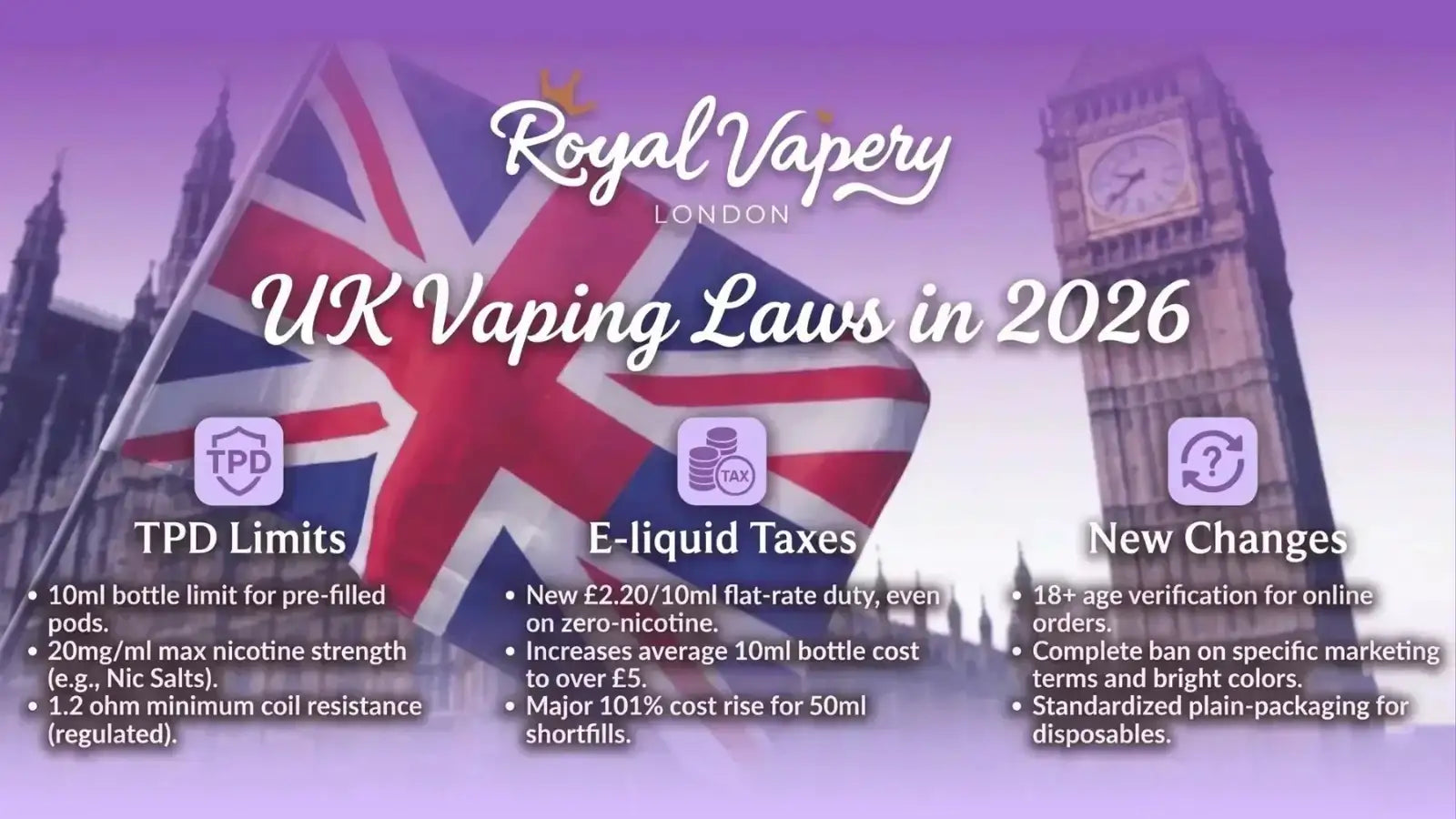
UK vaping laws regulate the sale, manufacture, advertising and use of e-cigarettes and e-liquids across England, Scotland, Wales and Northern Ireland. The Tobacco and Related Products Regulations 2016 (TRPR) set the core product rules, including a 20mg/ml maximum nicotine strength, a 2ml tank and pod capacity limit, and a 10ml refill bottle restriction for nicotine-containing e-liquids. Every vape product sold in the UK requires registration with the MHRA before it reaches shelves.
3 major regulatory shifts define the current landscape. Single-use disposable vapes became illegal to sell from 1 June 2025. The Tobacco and Vapes Bill cleared Parliament in April 2026 and awaits Royal Assent, introducing new powers over vape flavours, packaging and advertising. A new Vaping Products Duty of £2.20 per 10ml of e-liquid takes effect on 1 October 2026, covering all vaping liquid regardless of nicotine content. Adult smokers switching to vaping can explore compliant vape kits and e-liquids that meet every current UK requirement.
What Are the Current Vaping Laws in the UK?
Current UK vaping laws combine product safety regulations, age restrictions, advertising controls and environmental legislation. The TRPR, enforced by the MHRA, governs what vape products can be manufactured, imported and sold. 5 core legal requirements apply to every vaping product on the UK market, a maximum nicotine concentration of 20mg/ml (2%), a pod or tank capacity of 2ml, a nicotine-containing refill bottle limit of 10ml, child-resistant and tamper-evident packaging, and mandatory MHRA product notification before sale.

Age verification is a separate legal obligation. Selling vapes to anyone under the age of 18 is a criminal offence under the Children and Families Act 2014. Retailers must operate a Challenge 25 policy, requesting photographic ID from anyone who appears under 25. Proxy purchases, buying vapes on behalf of an under-18 carry the same penalties.
The disposable vape ban, enforced from 1 June 2025, added an environmental layer to existing product regulations. Rechargeable and refillable devices, including pod vape kits and vape starter kits, remain legal and represent the compliant alternatives for adult vapers.
Is Vaping Being Banned in the UK?
No, vaping is not being banned in the UK. The government recognises vaping as a less harmful alternative to smoking and continues to support its use as a cessation tool for adult smokers. Public Health England (now the Office for Health Improvement and Disparities) has consistently stated that e-cigarettes are substantially less harmful than combustible tobacco, though not risk-free.
The ban that took effect on 1 June 2025 targeted single-use disposable vapes only, not all vaping products. Rechargeable devices with replaceable pods and refillable tanks remain fully legal. The Tobacco and Vapes Bill, which cleared Parliament in April 2026, introduces new regulatory powers over flavours, packaging, display and advertising of vaping products. These measures aim to reduce youth uptake, not to prohibit adult vaping.
Refillable and rechargeable vape products, MHRA-notified nicotine salt e-liquids, shortfill e-liquids and nicotine shots all remain legally available for purchase by adults aged 18 and over.
Disposable Vape Ban UK: What Changed on 1 June 2025?
The UK disposable vape ban made it illegal to sell, supply or possess for sale any single-use vape from 1 June 2025. The legislation targets devices that cannot be recharged, refilled, or have their coil replaced. Nicotine and non-nicotine single-use vapes are both covered by the ban.
2 primary reasons drove the ban. Environmental damage caused by an estimated 5 million disposable vapes discarded every week in the UK created an urgent waste crisis, with lithium batteries posing fire risks in landfill and recycling facilities. The rapid rise in youth vaping, driven by cheap, colourful and flavoured disposable devices, represented the public health concern.
Penalties for businesses that continue selling disposable vapes include a £200 fixed penalty notice for a first offence, escalating to unlimited fines and up to 2 years’ imprisonment for repeat violations. Personal possession of legally purchased disposables is not an offence, the ban applies to sale and supply, not personal use of stock acquired before the deadline.
Compliant alternatives include rechargeable prefilled pod kits and refillable pod kits that deliver a similar user experience with lower environmental impact and greater long-term value.
UK TPD Rules for Vapes and E-Liquids
TPD stands for Tobacco Products Directive, the EU regulation adopted into UK law as the Tobacco and Related Products Regulations 2016 (TRPR). The TRPR retained all core TPD product standards after Brexit, and the MHRA continues to enforce them across Great Britain. 5 product categories are regulated: nicotine strength, tank capacity, refill bottle size, packaging requirements and ingredient safety.
Maximum nicotine strength allowed in the UK
The maximum nicotine strength permitted in UK e-liquids is 20mg/ml (2%). This limit applies to all nicotine-containing vaping products, including nic salts, freebase e-liquids, prefilled pods and nicotine shots. E-liquids advertised at strengths above 20mg/ml are non-compliant and illegal to sell in the UK. Common legal strengths available from UK retailers are 3mg, 6mg, 10mg, 11mg and 20mg.
Tank and pod size limits
Vape tanks, pods and cartridges are restricted to a maximum capacity of 2ml. This limit covers all refillable tanks, replaceable pods and prefilled cartridges. A pod holding more than 2ml of e-liquid does not comply with UK regulations and cannot be legally sold. Manufacturers design pods to the 2ml maximum, providing the largest compliant capacity.
Refill bottle size limits
Nicotine-containing e-liquid refill bottles are limited to 10ml. Larger bottles, such as 50ml and 100ml shortfills, are legal because they contain 0mg nicotine. Vapers add separate 10ml nicotine shots to shortfill bottles to reach their preferred strength, keeping each nicotine-containing container within the 10ml legal limit.
Packaging, warnings and child-resistant requirements
All nicotine-containing vaping products require child-resistant and tamper-evident packaging. The health warning “This product contains nicotine which is a highly addictive substance” must appear on packaging, covering at least 30% of the front and back surfaces. Product leaflets must include ingredient information, nicotine content, batch number and a recommendation to keep the product out of reach of children.
Ingredients and product safety requirements
E-liquids must not contain colourings, caffeine, taurine or any additive that creates an impression of health benefit. Diacetyl and other compounds linked to respiratory harm are prohibited. Every product must deliver consistent nicotine doses across puffs and feature a leak-proof refilling mechanism. Manufacturers submit full ingredient lists and emissions data to the MHRA at least 6 months before placing a product on the UK market.
| Regulation Area | Legal Limit | Applies To |
|---|---|---|
| Nicotine strength | 20mg/ml (2%) | All nicotine e-liquids, pods, shots |
| Tank / pod capacity | 2ml maximum | All tanks, pods, cartridges |
| Refill bottle size | 10ml maximum | Nicotine-containing e-liquid bottles |
| Packaging | Child-resistant + warnings | All nicotine vaping products |
| MHRA notification | Mandatory before sale | All e-cigarettes and e-liquids |
Which Vapes Are Legal in the UK?
A vape is legal in the UK when it meets 4 conditions: the device is rechargeable or refillable (not single-use), the pod or tank holds 2ml or less, any e-liquid contains 20mg/ml nicotine or lower, and the product is registered with the MHRA. Legal device categories include refillable pod kits, prefilled pod kits with replaceable pods, vape pen kits, sub-ohm kits and box mods.
Devices that fail any 1 of these conditions are non-compliant. A vape with a 3ml pod, a 25mg/ml e-liquid or no MHRA notification cannot be legally sold in the UK. Purchasing from trusted UK retailers ensures compliance with every regulation.
Are high-puff vapes legal in the UK?
Yes, high-puff vapes are legal when they use a rechargeable battery and a refillable or replaceable pod system with a 2ml capacity. Devices advertising 5,000, 10,000 or 15,000 puffs achieve high puff counts through refill pod systems, not by exceeding the 2ml limit. A big puff vape kit with a compliant 2ml pod and a separate refill container is a legal, TPD-compliant alternative to banned single-use disposables.
Legal Age for Vaping in the UK
The legal age to purchase vaping products in the UK is 18. This age restriction applies across England, Scotland, Wales and Northern Ireland under the Children and Families Act 2014 and the Nicotine Inhaling Products (Age of Sale and Proxy Purchasing) Regulations 2015. Retailers who sell vapes to anyone under 18 face a fine of up to £2,500.
Proxy purchasing, buying a vape on behalf of someone under 18, is a separate offence carrying the same penalty. The Tobacco and Vapes Bill introduces additional powers to strengthen enforcement, including a national licensing scheme for vape retailers and expanded powers for trading standards officers.
Where Can You Vape in the UK?
Vaping in public is not prohibited by national law in the same way smoking is banned indoors. The Health Act 2006 and its equivalents in Scotland, Wales and Northern Ireland ban smoking in enclosed public spaces, but these laws do not extend to e-cigarettes. Individual businesses, transport operators, local authorities and employers set their own vaping policies.
Most pubs, restaurants, shopping centres, public transport services and workplaces prohibit indoor vaping under their own rules. Outdoor vaping is permitted in most public spaces, though some councils restrict it in playgrounds and near school entrances. The Tobacco and Vapes Bill includes powers to make certain outdoor spaces, including areas outside hospitals, schools and children’s playgrounds, vape-free zones, once enacted through secondary legislation.
Vaping while driving is legal, though the Highway Code advises against any activity that reduces concentration. Vaping in a vehicle carrying passengers under 18 will become an offence once the Tobacco and Vapes Bill receives Royal Assent and its provisions are commenced.

Vaping Products Duty UK: What Happens from 1 October 2026?
Vaping Products Duty (VPD) is a new UK excise duty on all vaping liquid, announced by the government and confirmed by HMRC. The duty represents the first time e-liquids have been subject to a dedicated excise charge in the UK, placing them alongside alcohol and tobacco in the excise regime.
What the new vape tax is
VPD is a flat-rate excise duty of £2.20 per 10ml of vaping liquid (22p per ml). The duty applies to all vaping liquid produced in or imported into the UK, regardless of nicotine content. Nicotine-free e-liquids, shortfills, nicotine shots, prefilled pods and nic salts are all covered. Hardware, devices, coils, empty pods and chargers, is not subject to VPD; standard 20% VAT applies to hardware only.
When Vaping Products Duty starts
3 key dates define the VPD timeline. HMRC registration for manufacturers and importers opened on 1 April 2026. The duty itself begins on 1 October 2026, when all newly manufactured or imported e-liquids must carry a duty stamp on retail packaging. A grace period for existing unstamped stock runs until 1 April 2027, after which selling unstamped e-liquid becomes a criminal offence.
How vape duty may affect prices for consumers
E-liquid prices will increase across all formats from October 2026. A 10ml bottle of nic salt e-liquid currently priced at around £3 will carry an additional £2.20 in duty, plus 20% VAT on the duty amount, raising the total added cost to approximately £2.64 per 10ml bottle. A 100ml shortfill e-liquid will attract £22 in duty before VAT.
The government has simultaneously increased tobacco duty to maintain a price gap. Treasury estimates confirm that vaping will remain more than 3 times cheaper than smoking after both increases take effect. Choosing efficient, low-consumption pod kits and higher-strength nic salts can help minimise the financial impact of the new duty.
| Product Format | Duty Added | Duty + VAT Added |
|---|---|---|
| 10ml nic salt / freebase | £2.20 | £2.64 |
| 10ml nicotine shot | £2.20 | £2.64 |
| 50ml shortfill (0mg) | £11.00 | £13.20 |
| 100ml shortfill (0mg) | £22.00 | £26.40 |
| 2ml prefilled pod | £0.44 | £0.53 |
UK Vaping Law Timeline
UK vaping regulation has evolved through 3 landmark phases spanning a decade. Each phase introduced stricter controls on product standards, environmental impact and fiscal policy.
2016 product regulations
The Tobacco and Related Products Regulations 2016 (TRPR) transposed the EU Tobacco Products Directive into UK law, taking full effect on 20 May 2017. TRPR introduced the 20mg/ml nicotine cap, 2ml tank limit, 10ml bottle restriction, child-resistant packaging requirements and mandatory MHRA notification. These rules created a regulated, standardised vaping market across the UK for the first time.
2025 disposable vape ban
The Environmental Protection (Single-use Vapes) (England) Regulations 2024 banned the sale of single-use disposable vapes from 1 June 2025. Scotland, Wales and Northern Ireland enacted equivalent legislation on the same date. The ban removed all non-refillable, non-rechargeable vape devices from the legal market, redirecting consumers toward compliant rechargeable alternatives.
2026 vaping products duty
Vaping Products Duty (VPD) takes effect on 1 October 2026, adding £2.20 per 10ml to all vaping liquid sold in the UK. The duty is part of the Finance Bill 2025 to 26, with secondary legislation laid in March 2026. HMRC administers the duty through an approval scheme for manufacturers and importers, alongside a mandatory duty stamp scheme for retail packaging.
How UK Vaping Laws Affect Consumers and Retailers
UK vaping laws affect consumers and retailers in 3 practical ways, product availability, pricing and purchasing behaviour.
Product availability narrowed after the disposable ban removed the most popular device category from the market. Consumers must now choose from rechargeable pod kits, refillable tank systems and mod kits. Retailers who previously relied on disposable sales have restructured their stock toward compliant alternatives, including high-puff big puff vape kits that replicate the disposable experience with rechargeable hardware.
Pricing pressure intensifies from October 2026 when VPD takes effect. E-liquid costs will rise across every format, with shortfills absorbing the largest duty burden. Consumers who use lower-consumption devices, such as MTL pod kits paired with higher-strength nic salt e-liquids, will experience a smaller monthly cost increase compared to high-consumption sub-ohm setups.
Retailers face new compliance obligations including HMRC registration, duty stamp affixing and monthly reporting. The Tobacco and Vapes Bill will introduce additional requirements around product licensing, display restrictions and advertising bans once fully enacted through secondary legislation.
Common Myths About Vaping Law in the UK
Myth: All vaping is being banned in the UK. The disposable vape ban removed single-use devices only. Rechargeable, refillable and replaceable pod systems remain legal for adult purchase.
Myth: High-puff vapes are illegal. A vape offering 10,000+ puffs is legal when it uses a rechargeable battery, a 2ml pod and a separate refill system, all within TPD limits.
Myth: Vaping indoors is illegal everywhere. No national law bans indoor vaping. Individual venues, employers and transport operators set their own policies. Legislation within the Tobacco and Vapes Bill will create designated vape-free zones in specific outdoor spaces near hospitals, schools and playgrounds.
Myth: Nicotine-free e-liquids are unregulated. The new Vaping Products Duty applies to all vaping liquid, including 0mg nicotine-free products. Shortfills, despite containing no nicotine, attract the full £2.20 per 10ml duty from October 2026.
Myth: You can still buy disposable vapes if the shop has old stock. The ban prohibits the sale and supply of single-use vapes after 1 June 2025. Retailers cannot sell remaining stock past the deadline, doing so is a criminal offence.

FAQs About UK Vaping Laws
Is vaping legal in the UK in 2026?
Yes, vaping is legal in the UK in 2026. Adult smokers aged 18 and over can purchase and use rechargeable, refillable and prefilled pod vape kits alongside TPD-compliant e-liquids. The disposable vape ban removed single-use devices from sale, but all rechargeable and refillable vaping products remain legal.
Are disposable vapes banned in the UK?
Yes, disposable vapes are banned in the UK. The sale, supply and possession for sale of all single-use, non-refillable, non-rechargeable vaping devices became illegal from 1 June 2025 across England, Scotland, Wales and Northern Ireland.
When did the disposable vape ban start in the UK?
The disposable vape ban started on 1 June 2025. Retailers had from 24 October 2024 until the deadline to sell through existing stock. Trading standards officers enforce the ban through civil sanctions and criminal penalties for non-compliance.
What is the legal age to buy vapes in the UK?
The legal age to buy vapes in the UK is 18. Selling vaping products to anyone under 18 is a criminal offence under the Children and Families Act 2014. Retailers must operate a Challenge 25 policy and request photographic ID from customers who appear under 25.
Can adults buy vapes for under-18s?
No, proxy purchasing is illegal. Adults who buy or attempt to buy vaping products on behalf of anyone under 18 commit a criminal offence. The penalty is a fine of up to £2,500. The Tobacco and Vapes Bill introduces additional enforcement powers to strengthen proxy purchase prevention.
Are 600-puff or high-puff vapes illegal?
No, high-puff vapes are legal when the device is rechargeable, the pod capacity does not exceed 2ml, and the e-liquid strength stays within 20mg/ml. High-puff devices achieve their puff count through refill pod systems, not by exceeding TPD limits. A 600-puff device with a non-replaceable coil and a non-refillable tank is classified as a single-use vape and is banned.
What makes a vape legal in the UK?
A vape is legal in the UK when it meets 4 requirements: the device is rechargeable or refillable, the pod or tank holds 2ml or less, the e-liquid contains 20mg/ml nicotine or below, and the product is registered with the MHRA. Non-compliant products are illegal to sell.
What does TPD mean for vapes?
TPD stands for Tobacco Products Directive, the EU regulation that established product safety rules for vaping devices and e-liquids. The UK adopted these rules as the Tobacco and Related Products Regulations 2016 (TRPR). TPD/TRPR sets the 20mg/ml nicotine cap, 2ml tank limit, 10ml bottle restriction and packaging standards that govern every vape product sold in the UK.
What is the maximum nicotine strength allowed in the UK?
The maximum nicotine strength allowed in UK e-liquids is 20mg/ml (2%). This limit applies to all nicotine-containing vaping products, including nicotine salts, freebase e-liquids, prefilled pods and nicotine shots.
Can you vape indoors in the UK?
Indoor vaping is not banned by national law. The smoking ban under the Health Act 2006 does not cover e-cigarettes. Individual businesses, workplaces, pubs, restaurants and transport operators set their own indoor vaping policies. Most enclosed public venues prohibit vaping under internal rules.
Can you legally vape in public in the UK?
Yes, outdoor vaping is legal in most public spaces across the UK. No national law prohibits vaping outdoors. Some councils restrict vaping near school entrances and in children’s play areas. The Tobacco and Vapes Bill will extend vape-free rules to designated outdoor spaces near hospitals and schools once enacted.
Is there a vape tax in the UK?
Yes, a new vape tax starts on 1 October 2026. Vaping Products Duty (VPD) charges £2.20 per 10ml on all e-liquids, including nicotine-free products. VAT applies on top of the duty. Hardware is not subject to VPD.
Will all vapes be banned in the UK in the future?
No, a total vape ban is not planned. The UK government supports vaping as a less harmful alternative to smoking for adult users. Regulation focuses on reducing youth uptake through flavour restrictions, advertising bans and display controls, not on removing vaping products from the adult market. The Tobacco and Vapes Bill grants ministers powers to regulate, not to prohibit, the sale of vaping products to adults.


