


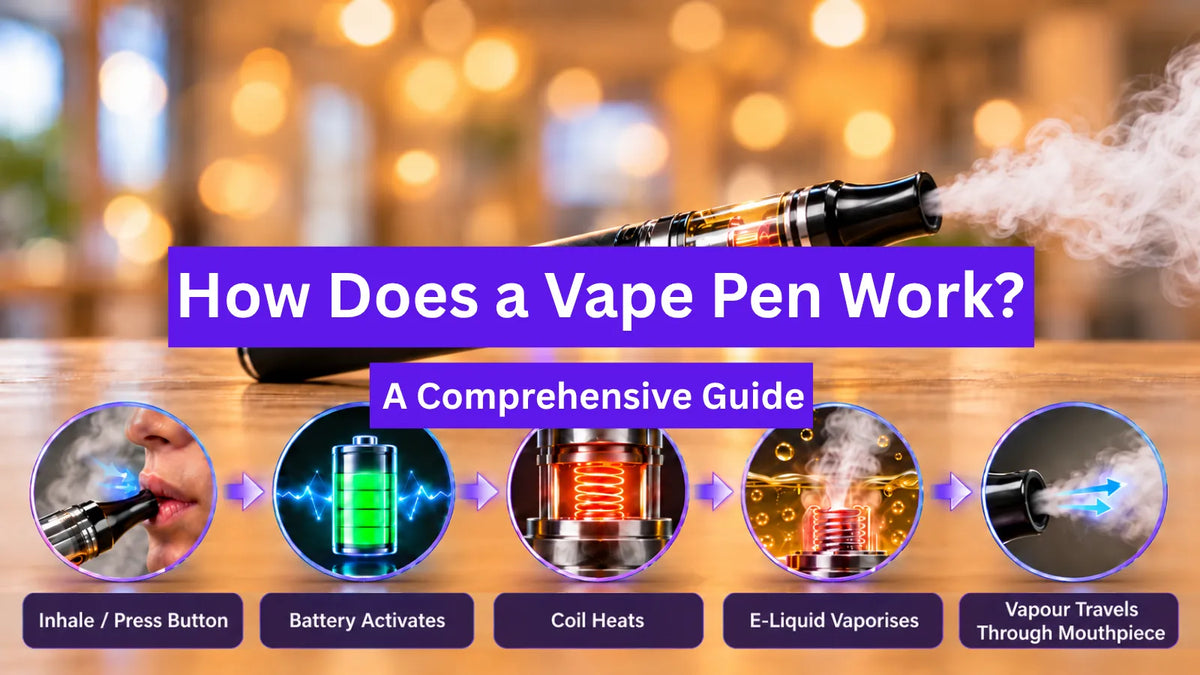
A vape pen heats e-liquid into vapour using a battery-powered coil inside a slim, pen-shaped device. Vape pens have become one of the most common starting points for adult smokers switching away from cigarettes in the UK, mainly because they pair simple operation with a familiar mouth-to-lung draw.
This guide explains the parts, the heating process, the activation methods and the e-liquid behind every puff. Vaping is less harmful than smoking, though it is not risk-free, and the NHS recommends it as a stop-smoking tool for adult smokers only.
What is a vape pen?
The vape pen Kits are slim, cylindrical e-cigarettes that heat e-liquid into vapour through a rechargeable battery and a replaceable coil. The shape gives the device its name, sitting closer to a pen than to a boxy mod.
Vape pens carry an internal battery, a small tank or pod, and a fixed or lightly adjustable airflow, which keeps the controls minimal for newcomers. Most pens deliver a mouth-to-lung draw, the same inhale style a cigarette uses, where vapour is drawn into the mouth first and then to the lungs. This design makes the vape pen kits range a practical entry route for smokers testing vaping for the first time.
How does a vape pen work?
A vape pen works by sending power from a rechargeable battery to a coil, which heats e-liquid held in a tank or pod and turns it into inhalable vapour. No combustion occurs, so the device produces vapour rather than smoke.
The coil reaches temperature in under a second once the device fires. Heated e-liquid vaporises against the coil's surface, travels up through the mouthpiece, and enters the lungs as a fine mist. Each component depends on the others, the battery supplies the current, the coil supplies the heat, and the e-liquid supplies the flavour and nicotine.
What are the main parts of a vape pen?
A vape pen contains four main parts that work in sequence, the battery, the coil, the tank or pod, and the mouthpiece. Each part holds one job in the chain that converts liquid into vapour. The sections below define every component and its role.
The battery
The battery powers the coil and stores the charge that runs the device. Vape pen batteries are usually internal and rechargeable through a USB-C cable, with capacities between 350mAh and 1500mAh on common UK pens.
Capacity decides, how long a pen lasts between charges, so a 1000mAh cell suits a moderate day of vaping. Consistent power output keeps flavour stable, which is why a healthy battery matters for taste as much as for runtime. Information on external cells sits within the vape batteries range for users running larger setups.
The coil
The coil heats the e-liquid and sets the resistance that controls vapour and warmth. Coil resistance is measured in ohms (Ω), and vape pens typically run high-resistance MTL coils between 0.8Ω and 1.8Ω.
Higher resistance produces a tighter, cooler draw suited to nic salts, while a slightly lower resistance widens the inhale. A cotton wick inside the coil soaks the liquid before it meets the heat. Coils wear out with use, and our vape pen coil guide covers replacement timing and resistance choices in detail.
The tank or pod
The tank or pod holds the e-liquid and feeds it to the coil through the wick. UK tanks and pods cap at 2ml capacity under TPD rules, a limit that applies to every compliant device.
Refillable pods let you add your own e-liquid, while prefilled pods arrive sealed and ready. The tank's airflow ports decide how much air mixes with the vapour on each draw. Pod-based pens overlap with the wider pod kits category for vapers comparing formats.
The mouthpiece
The mouthpiece channels the vapour from the coil into your mouth and shapes the draw resistance. Materials include plastic, metal and food-grade silicone, with each affecting feel rather than flavour.
A narrow mouthpiece tightens the inhale toward a cigarette-style draw, and a wider bore loosens it. Mouthpiece design manages airflow, which influences how warm and dense the vapour feels.
How does a vape pen turn e-liquid into vapour?
A vape pen turns e-liquid into vapour through conduction heating, where the coil makes direct contact with the wick and vaporises the liquid it has absorbed. Conduction reaches temperature almost instantly, which gives vapour the moment you inhale.
The wick draws fresh e-liquid toward the coil between puffs, keeping the supply steady. Temperature stays below the point of combustion, so the device avoids the tar and smoke produced by a burning cigarette. This controlled heating preserves the flavour compounds in the e-liquid and delivers a cleaner draw than burning tobacco.
How do you activate a vape pen?
Vape pens activate in two way, draw activation and button activation. Activation decides whether the coil fires automatically or on a manual press. Both methods produce the same vapour through the same coil.
Draw-activated vape pens
Draw-activated pens fire the coil automatically when a sensor detects your inhale. No button sits on the device, so the inhale alone triggers heating. This buttonless design suits smokers moving across from cigarettes, because the action mirrors drawing on a cigarette. Draw activation removes setup steps and keeps operation close to instinctive.
Button-activated vape pens
Button-activated pens fire the coil when you press and hold a fire button during the inhale. The button gives a moment of manual control over when heating starts. Most button pens use a five-click safety lock, where five quick presses switch the device on or off. Manual firing lets you prime the airflow before drawing, which some vapers prefer for a fuller first puff.
What e-liquid works in a vape pen?
A vape pen runs best on 50/50 PG/VG e-liquid, the balanced ratio matched to high-resistance MTL coils. Nicotine salts suit pens especially well, delivering a smooth throat hit and fast nicotine satisfaction at higher strengths. UK e-liquid carries a maximum nicotine strength of 20mg/ml, sold in 10ml bottles under TPD rules.
Common salt strengths include 10mg and 20mg, chosen by smoking habit rather than preference alone. The nic salt e-liquids range covers the flavours and strengths designed for low-wattage pens, and the wider e-liquids selection holds every format Royal Vapery stocks.
How do you use a vape pen for the first time?
Set up a new vape pen in five steps before the first puff. Each step prepares one part of the device so the opening draw tastes clean rather than burnt. Follow the order below for a smooth start.
- Charge the battery fully using the supplied USB-C cable until the indicator light shows a complete charge.
- Fill or fit the pod, adding 50/50 e-liquid to a refillable tank or clicking a prefilled pod into place.
- Prime the coil by leaving the filled pod to stand for five minutes, letting the wick soak the e-liquid.
- Take two gentle pulls without firing, drawing liquid into the coil to prevent a dry, harsh first hit.
- Draw on the pen normally, using a slow mouth-to-lung inhale of one to two seconds.
Priming protects the coil from burning on the opening puff, which is the single most common first-time mistake. A primed coil delivers full flavour from the start and extends the coil's working life.
How do you keep a vape pen working well?
A vape pen lasts longer with three habits, regular charging, clean connections, and timely coil changes. Maintenance protects both flavour and battery health across months of use. The points below cover the routine.
- Charge before the battery empties, since topping up at 20% protects long-term capacity better than running flat.
- Wipe the connection points between the pod and battery with a dry cotton bud to clear e-liquid residue.
- Replace the coil every 1 to 2 weeks, or sooner once flavour fades or a burnt note appears.
- Store the pen upright in a cool, dry place to stop leaks and protect the e-liquid from heat and light.
Worn coils sit behind most flavour complaints, so a fresh coil resolves a burnt taste in minutes. Fresh pods sit within the replacement pods range for pens that use swappable cartridges.
Who is a vape pen for?
A vape pen suits adult smokers switching to vaping who want a simple, cigarette-style device. The mouth-to-lung draw, tight airflow and high-strength nic salts together recreate the sensation of smoking without burning tobacco. Beginners benefit from the minimal controls, and switchers benefit from the rapid nicotine satisfaction.
The NHS lists vaping among its recommended routes for quitting cigarettes, while stressing that vaping is for smokers and ex-smokers, never for non-smokers or under-18s. Single-use disposables are banned across the UK from 1 June 2025, so a rechargeable, refillable pen now stands as the practical choice. Smokers weighing their first device can compare the starter kits range or read our vape pen vs pod kit comparison for guidance.
Frequently Asked Questions (FAQs)
Is a vape pen better than smoking?
A vape pen is less harmful than smoking, though not risk-free, according to NHS guidance. Vaping avoids the tar and combustion that drive most smoking-related harm, which is why the NHS recommends it as a stop-smoking aid for adult smokers. Vape pens contain nicotine, an addictive substance, so non-smokers and under-18s should never start. Speak to a GP or local stop-smoking service for tailored support.
How long does a vape pen battery last?
A vape pen battery lasts most of a day for moderate UK vapers on a single charge. Runtime depends on battery capacity, draw length and how often you puff, so a 1000mAh cell outlasts a 350mAh one. Frequent, longer draws drain the cell faster. Recharging through USB-C usually takes 45 to 90 minutes from empty to full.
Why is my vape pen not producing vapour?
A vape pen stops producing vapour for three common reasons, a flat battery, a worn coil, or a poor connection. Charge the device first, since a low battery sits behind most cases. Clean the contact points between pod and battery with a dry cotton bud if charging fails to help. Replace the coil when flavour fades despite a full charge and clean connections.
Why does my vape pen taste burnt?
A vape pen tastes burnt when the coil heats with too little e-liquid reaching the wick. Chain vaping causes this, drawing repeatedly before the wick reabsorbs liquid, so pause a few seconds between puffs. A dry wick on a fresh coil produces the same harsh note, which priming prevents. Refill a near-empty pod promptly to keep the coil saturated. When your vape pod tastes burnt, stop using it and check the pod
Are vape pens legal in the UK?
Vape pens are legal in the UK when they meet TPD and TRPR rules. Compliant devices carry a 2ml tank limit, a 20mg/ml maximum nicotine strength, and 10ml refill bottles, with every product registered with the MHRA. Sale to under-18s is illegal across the UK. Single-use disposable vapes have been banned since 1 June 2025, so rechargeable pens remain compliant.
Can you refill a vape pen?
Refillable vape pens accept any compatible 50/50 e-liquid added to the pod or tank. Prefilled pens use sealed pods instead, swapped rather than topped up. Refilling lowers running costs and widens flavour choice, making refillable pens the more economical format over time. Match the e-liquid to the coil resistance, pairing nic salts with high-resistance MTL coils for the smoothest result.


